Harley Crankcase Lapping Tool and Usage
Article by Mark Trotta
A fundamental part of a Harley Big-Twin or Sportster engine build is checking/lapping the main bearing races. The goal is to have the crank assembly sitting dead-parallel in the cases, since this is where the flywheels will be spinning thousands of times a minute.
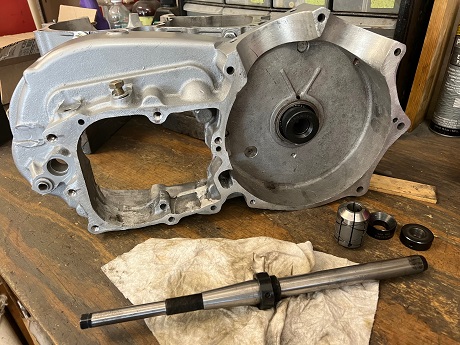
Lapping the main bearing race assures precise alignment of flywheel shafts, allowing maximum power and engine life.
The tool required for this service is called a Crankcase Main Bearing Lap, also referred to as a Pinion Shaft Bearing Lap Tool. This article covers tool usage, as well as it's main parts.
Before the Motor Company discontinued this tool, it was sold at dealerships as part # 96710-40. It covered Big-Twins 1955-1998 and Ironhead Sportsters 1957-1976. Also fit on Harley Flathead UL models 1937 through 1948.
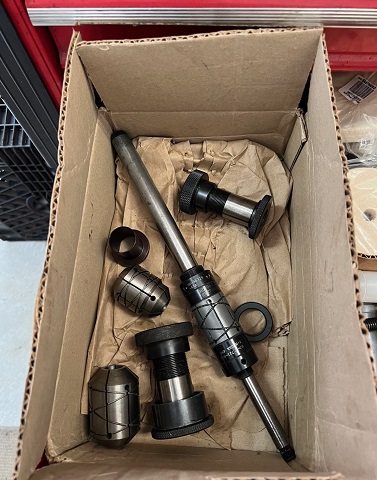
The Harley-branded tool was actually made by Kent-Moore, which they no longer make. Fortunately, they are still available in the aftermarket (more on that below).
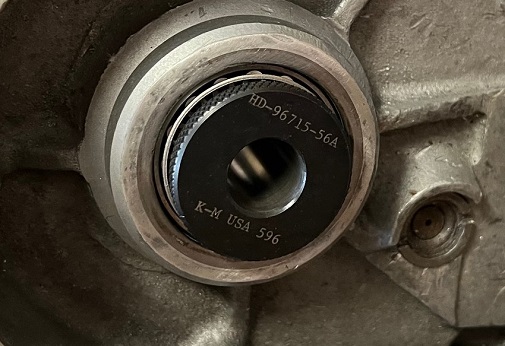
There are three main parts of the lapping tool, an arbor, pilot, and lap head.
The long shaft of the tool is called the arbor. It goes through the pinion bearing race and into the pilot, or guide sleeve.
The part that does the actual lapping are called lap heads, or expansion collars.
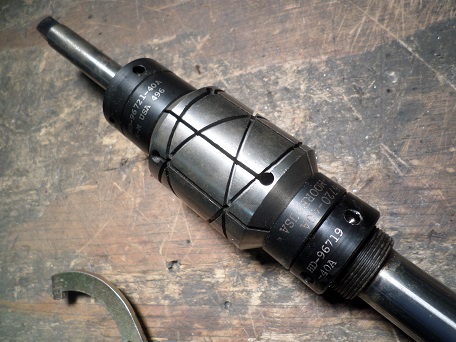
The expansion collars are tightened/loosened with appropriate-sized spanners.
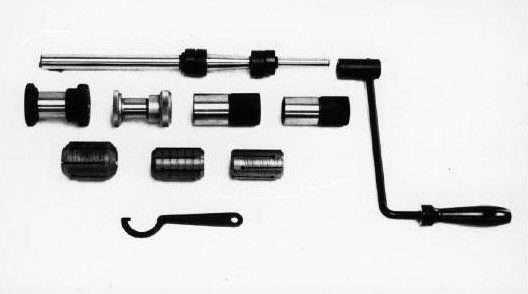
A Harley Crankcase Lap Tool Kit will include two different size pilots, three different size lap heads, a crank handle, and spanner wrench to tighten and loosen the lap head collars.
*************
Lap Tool In Use
Part of this Ironhead Bottom End Overhaul included lapping the pinion shaft bearing race and refitting pinion roller bearings.
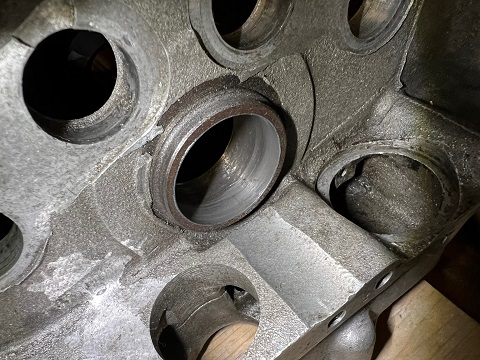
The line-lapping procedure verifies case alignment, as well as removing any traces of wear at the sides of roller paths.
Line Lapping vs Line Boring
If the pinion race needs to be bored, lapping is required afterwards. It's done with the same tool, but with a finer compound. Line boring uses coarse abrasives, lapping uses a fine compound, which removes less metal and leaves a smoother finish.
*************
Crankcase Lapping Procedure
A pilot is temporarily installed in the left-side case.
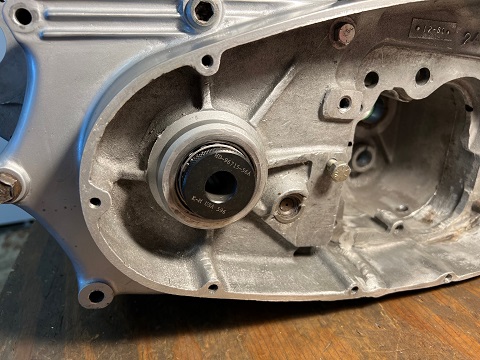
There is a 1.00" ID pilot for Harley Big-Twins, and a .75" ID pilot for Ironhead Sportsters.
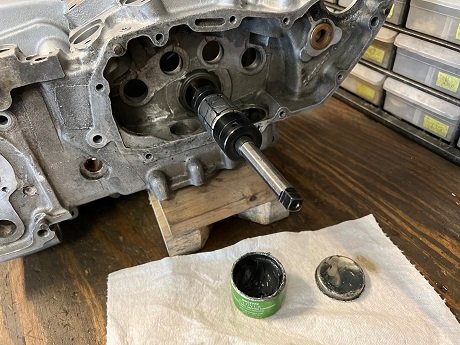
With the expansion collar fitted, the arbor goes through the right-side case and lines up with the pilot in the left-side case.
Apply a thin coat of fine lapping compound to the collar and install tool into case.
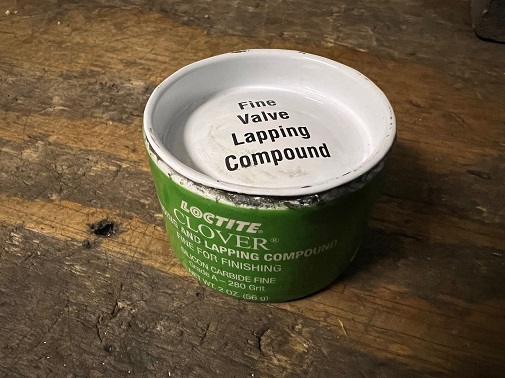
I'm using Clover 280 grit fine compound.
Turn the arbor handle by hand only at a slow to moderate pace. To avoid any grooves or tapering, slowly and methodically work lap back and forth in race.
As you turn the tool, the lapping compound on the collar finely sands the bushing.
Pull the tool out occasionally, wipe compound off of bushing with a shop towel or rag, and check progress. A smooth and dull solid color should begin to appear.
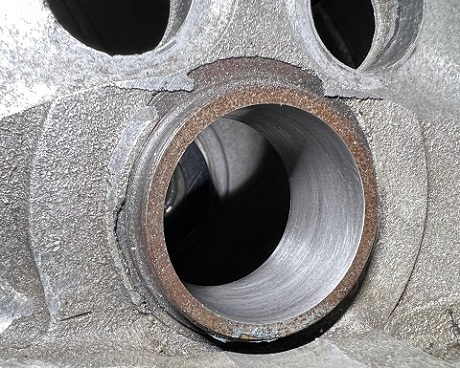
The end result will be an even gray color across the bushing surface.
If you need to make another pass--before putting on more lapping compound--clean the tool with brake parts cleaner or other cleaning solvent, then dry with compressed air.
After using the tool, clean off all the lapping compound with brake parts cleaner or other cleaning solvent, then dry with compressed air before putting away.
*************
H-D 96710-40 Tool Set
If you're looking to buy a Harley engine lapping tool, you may find a good used one, or you can buy an aftermarket kit offered by V-Twins.
The V-Twin tool set fits Harley Big-Twins 1936 through 1998, as well as Ironhead Sportsters 1957 through 1976. Also works on Harley Flathead UL models 1937 through 1948.
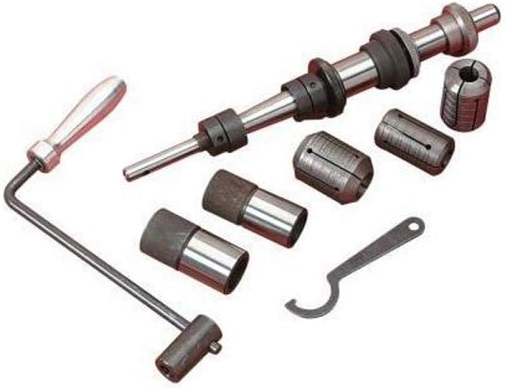
Shop: Combo Lapping Tool
If needed, pilots and lap heads can be purchased in different sizes. Can also be used to re-size four-speed transmission bushings.
*************
Conclusion
For maximum power and longevity, engine case main bearing races should for aligned to ensure the flywheels spin perfectly parallel.
Notes and Misc
When done with procedure, you may find you need oversize pinion roller bearings. Fortunately. these are readily available in different sizes. The factory service manual explains how to calculate what size you'll need, but many techs (including myself) just fit roller bearings by trial and error.
It's possible for the race to be worn beyond limits, in that event there is no alternative but to replace it. If you're faced with this task, heating up the case will help the race come out easier. A shop press is helpful.
And once a new race is installed, it will need lapping to confirm trueness.
*************
Related Articles:
Repair Stripped Threads In Aluminum
Motorcycle Engine Build
Best Digital Caliper For Engine Building