Renew Stainless Steel Motorcycle Fender
Article by Mark Trotta
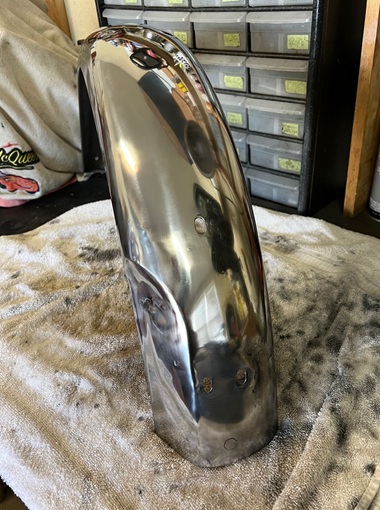
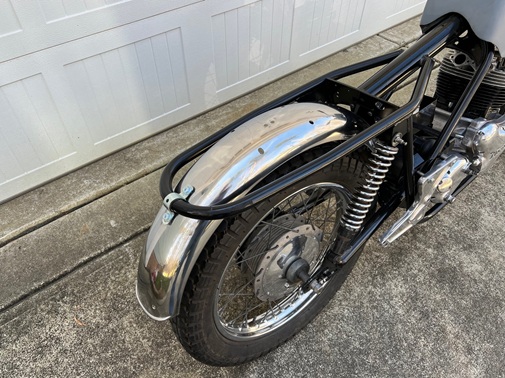
At a casual glance, most people would think this fender is chrome. But it's not chrome. It's stainless steel.
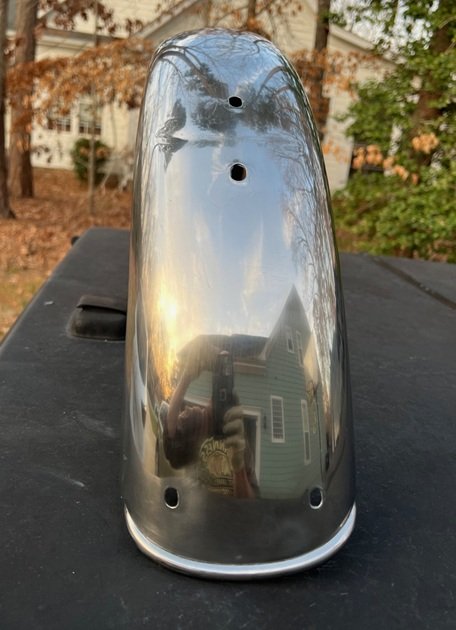
Classic motorcycles that were originally fitted with stainless steel fenders include Norton, Triumph, Royal Enfield, and Moto Guzzi.
With a lot of wet sanding, a good amount of buffing, and a little hand polishing, old stainless steel fenders can be made to shine as deep and bright as chrome.
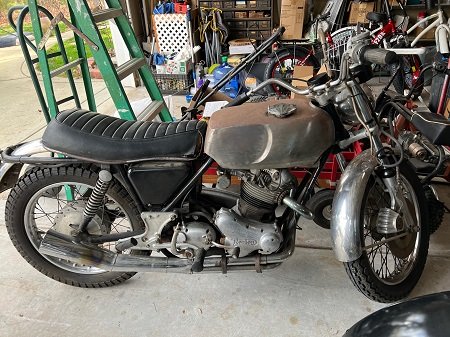
But if they were neglected for many years, like on this 1974 Norton Commando, the process will be very time-consuming.
The Process
After removing from bike, the first step was a good cleaning with shop towels and brake parts cleaner.
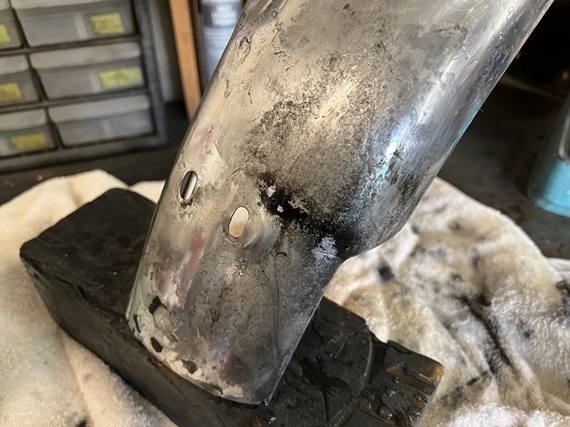
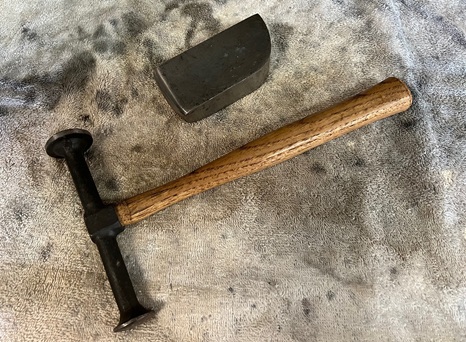
Next, a hammer and dolly were used to flatten out a few bolt holes.
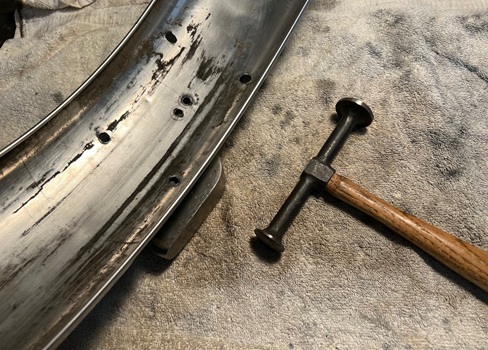
A stainless fender can be as thin as 18 gauge, so don't be tempted to use a ball peen hammer--it's too round and too heavy. You may end up leaving high spots on the other side that will require dressing back down, and end up making it worse.
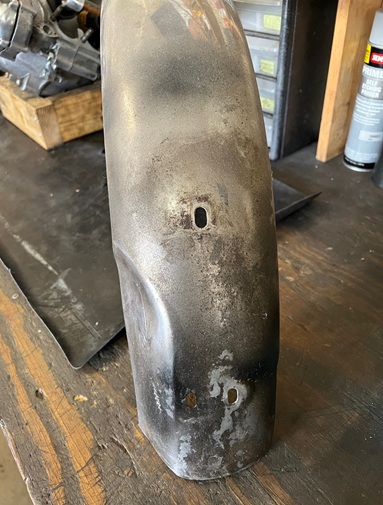
The rear fender ('mudguard' in Brit-speak) had a fair amount of scratches, but no dents.
The wet sanding process began with 400 grit, which soon revealed spots requiring coarser paper. Deeper scratches were removed with 240 and then 320 grits.
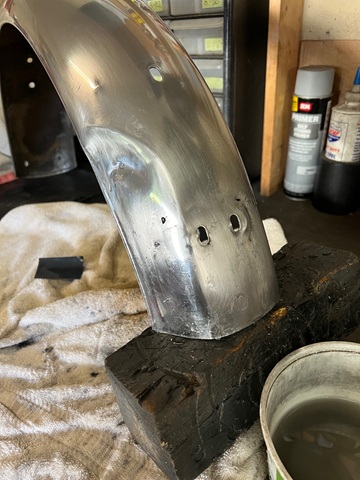
Once the deep scratches were gone, wet sanding continued with another session of 400 grit, then 600 grit.
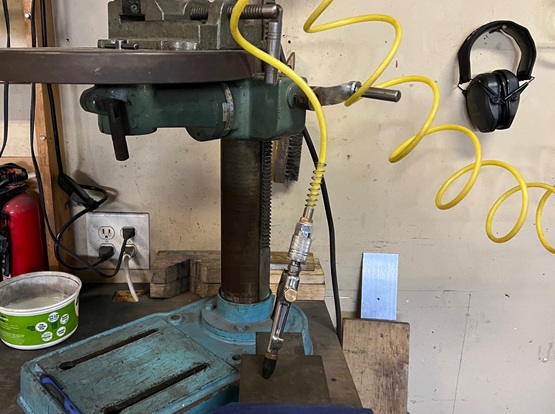
Before going over to the buffing wheel, the entire fender was rinsed with water then blow-dried with compressed air.
The first session at the wheel (with brown compound) showed progress, but a lot more sanding still needed to be done.
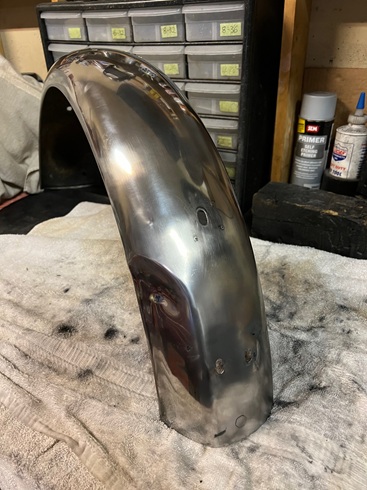
A few spots were gone over with 400, then 600, then over to the buffing wheel.
After each buffing session, I walked out from the garage to the driveway and propped the fender on the back of my pickup truck.
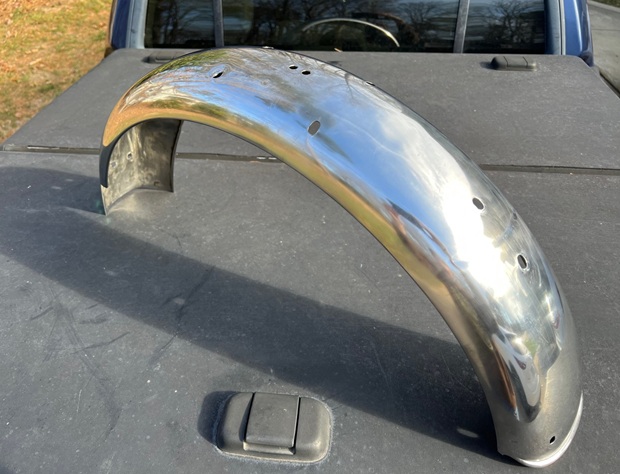
Direct sunlight is the best way to see imperfections.
Next was 800, followed by 1000 grit. Another session at the buffer, this time with a softer wheel and white compound.
The fender was then given a long, final wet-sand with 1500 grit.
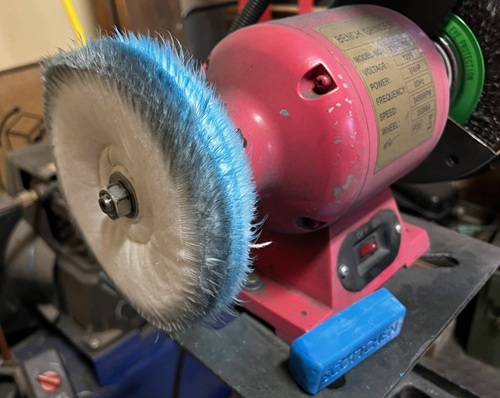
Final buffing was done with blue compound and brand new cotton wheel.
**************
Hand Polishing
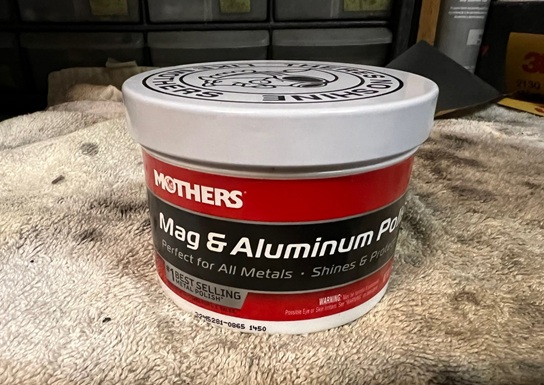
Although this step is far less time-consuming than either wet-sanding or buffing, final-polishing by hand is just as important to get that deep shine.
**************
Materials Used
Wet and Dry Sandpaper (used wet) Assorted
Final Thoughts
I could have purchased brand new fenders for about $200 each and been done with it. But by taking the time and effort to renew the 50 year old originals, I saved $400 on my overall restoration budget.
Disclaimer: Please use caution as machine buffing can be dangerous. If you don't have experience buffing metals, consider paying someone to do this.
**************
Articles of Interest: