Norton Commando Timing Cover Removal and Installation
Text and Pictures by Mark Trotta
There are early and late Norton Commando timing covers, and removal and installation of either is similar.

Pictured: 1974 850 Commando engine
Early Covers
Early Commandos (most 1968/1969 750 engines) have an engine prefix of 20M3 and have their ignition points in a distributor housing. There was also an external rev-counter drive.
Late Covers
The later 'camshaft points' timing cover, as shown in this article, were fitted to all later engines with a prefix of 20M3S. The two sets of contact breakers (points) are behind the round cover.
Getting Started
There are 12 screws holding the timing cover on, but with the engine still in the frame, several items need to be removed beforehand.
On this Roadster, exhaust pipes had already been taken off during cylinder head removal.
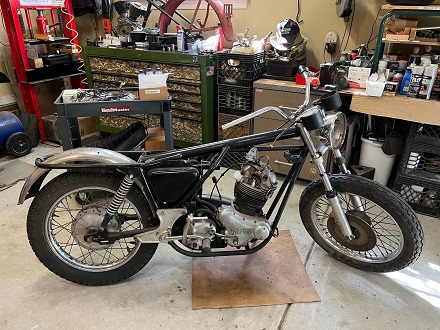
On 1974 and earlier models, the right-side shift pedal gets removed. Later models may require brake pedal removal.
**********
The two bolts that hold the contact breaker cover (points cover) can be removed with a flat-blade screwdriver.
Breaker Plate Removal
Holding the breaker points plate are two studs known as pillar screws.

The pillar screws (shown below) have a head size of 8.23mm (.324"), so neither a metric or standard socket will fit correctly.

The correct size is a 2BA Whitworth.
Related Article: What Are Whitworth Tools?
In the center of the points plate is the cam center bolt, which has a head size of 11.4mm (or .45"). The correct socket/wrench size is 3/16 Whitworth.

CAUTION: Be very careful with the cam center bolt, it threads into the camshaft!

TIP: While removing old parts, use a penetrating fluid beforehand (like WD40) and allow time to soak.
Remove Ignition Rotor
The ignition rotor (breaker cam) is a light press fit into the case. It gets removed before the cover comes off.

The factory service manual calls for a specialty tool (06-4298 slide hammer) to remove the rotor. This tool has a double function of removing rocker spindles from the cylinder head.
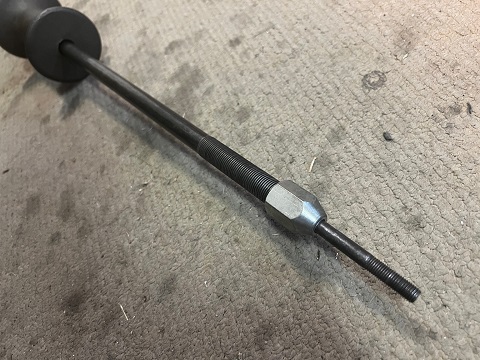
As an alternative to buying the special tool, I adapted my body shop slide hammer to accommodate a 5/16-24 bolt, which was then threaded into the breaker cam.

A single soft rap of the weight removed the breaker cam.
Oil Pressure Relief Valve
On the back/bottom of the cover is the oil pressure relief valve. It's easier to remove while cover is still bolted to motor.
Pictured below: pressure release valve cap and spring, piston, and washer.

Not shown are the old shims, which were stuck inside the piston!
The relief valve cap measures 28.2mm (or 1.10") so neither metric or standard sockets will fit correctly.
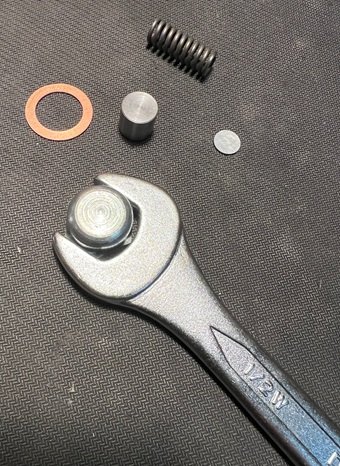
The proper socket/wrench size is 1/2 Whitworth.
Oil Feed Pipe
Also on rear of cover is the rocker feed banjo bolt, as well as an oil junction block bolt.
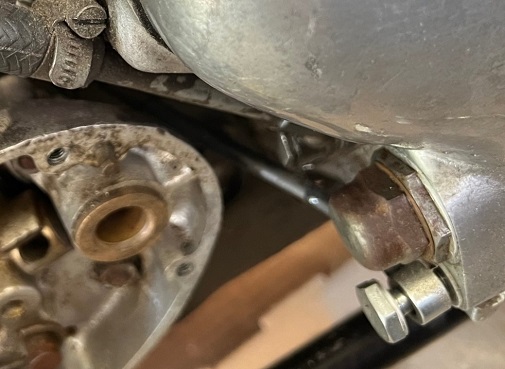
There are two styles of oil pipe junction blocks. Early versions like the one pictured (06-2206) are straight. Later versions (06-4134) are slightly curved.
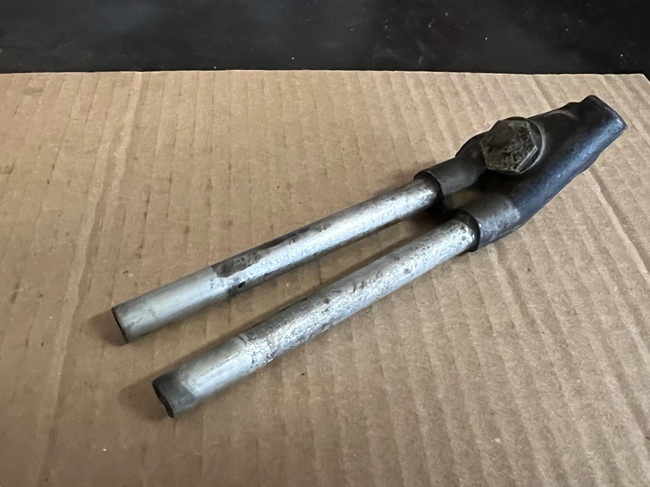
The oil junction block bolt-head measures 15.2mm (or .62") so neither metric or standard sockets will fit correctly.

The proper socket/wrench size is 1/4 Whitworth.
**********
Timing Cover Bolts
On early 850 models, the 12 timing cover screws are comprised of (1) long, (7) medium, and (4) short. On late 850 Mk3 models, they are all the same length.

Factory bolts are a flat-blade domed head, but for those unconcerned with originality, hex-head bolts are a nice upgrade.
On these aftermarket replacement bolts, measured lengths were 1", 1-1/8", and 1-1/4".

TIP: An easy way to keep track of which bolt goes where is arranging them in a piece of cardboard.
**********
Wire Harness
If you haven't done so already, disconnect the two contact breaker leads. They are male and female and pull apart from each other.

TIP: Draw the bullet snap connectors through the the cover one at a time.

If the cover doesn't come off, make sure you removed all 12 bolts. Sometimes the gasket sticks to the crankcase, and you may need to work it free. Try a little gentile persuasion with a gasket scraper and plastic mallet.

Inside this cover is casting number 06-1072. This is not a part number. The Norton part number is 06-6161.
**********
Polishing The Cover
This was the fun part!
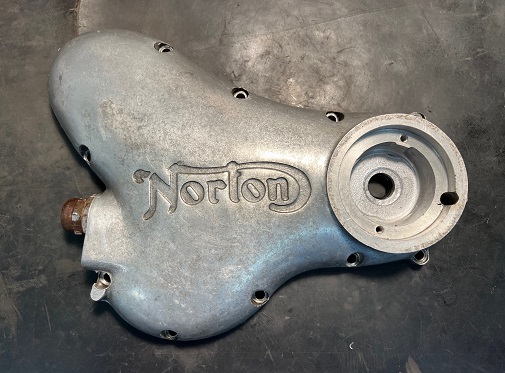
First, a few deep grooves were removed with a file, then the cover was completely sanded with 80 grit Emory cloth.

Next was 120 Grit Emory cloth.
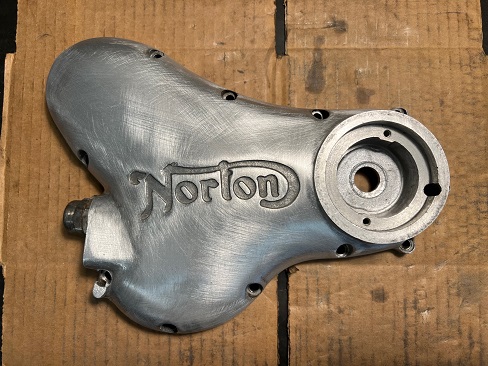
Then switching to 240 wet sandpaper.
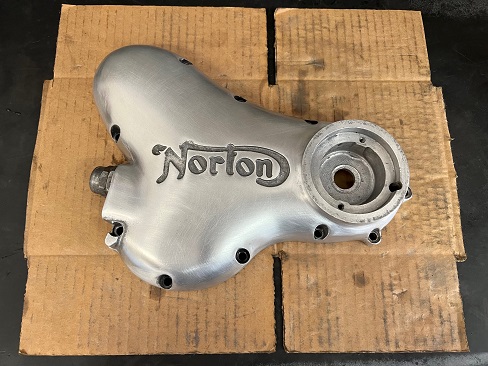
More wet sanding with 400, 600, and 1000 grit paper, then over to the buffing wheel.
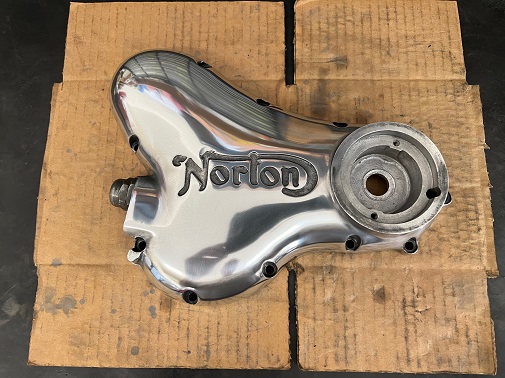
Related Article: How To Polish Aluminum Engine Parts
**********
Remove and Install Timing Cover Seals
There are two oil seals that fit into the cover, both are generally unusable once taken out.
Crankshaft Oil Seal
The crank seal is retained with a circlip.
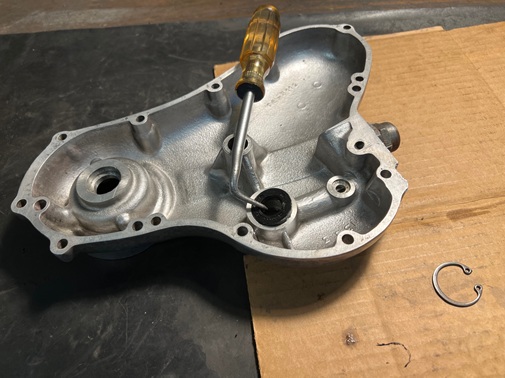
With service tool 06-4292 or equivalent, drive the new seal fully into the housing. The spring side (pressure side) faces into the cover.
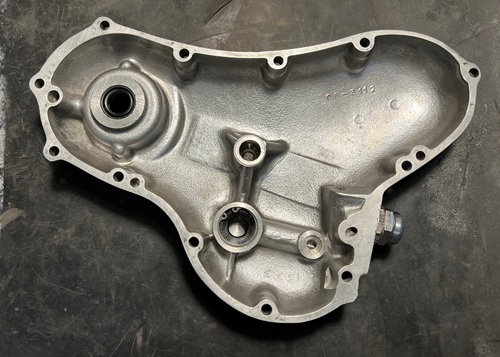
Refit the circlip sharp-side towards crankcase.
Contact Breaker Housing Seal
Norton catalogs a special installation tool for the contact breaker housing seal (06-1359), but it can be knocked in with a suitably sized socket and light hammer.
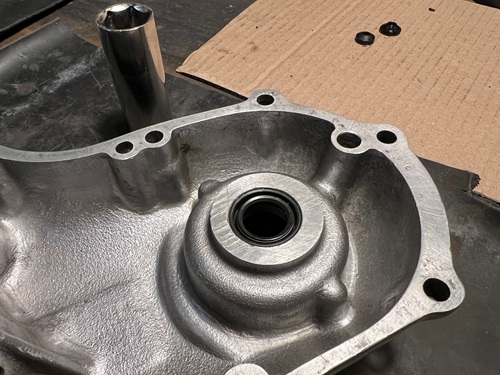
The contact breaker housing seal is also referred to as a cam seal. The spring side (pressure side) faces engine.
Oil Pump Seal
There is a small round seal that sits between oil pump and cover.
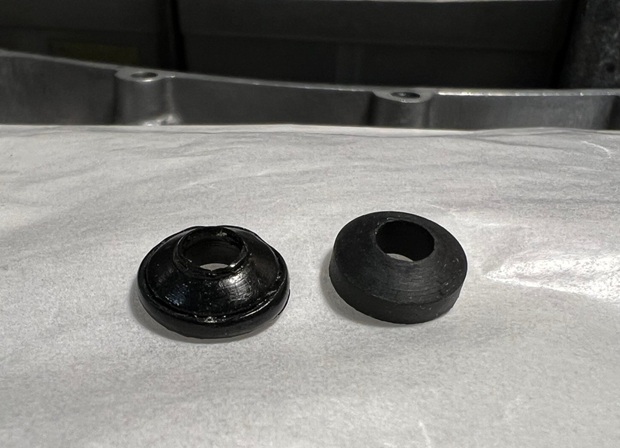
Pictured: Old oil pump seal on left, new seal on right.

Before applying gasket sealer, push the cover up with gasket in place and check fitment. Remember that the oil pump seal needs to be compressed.
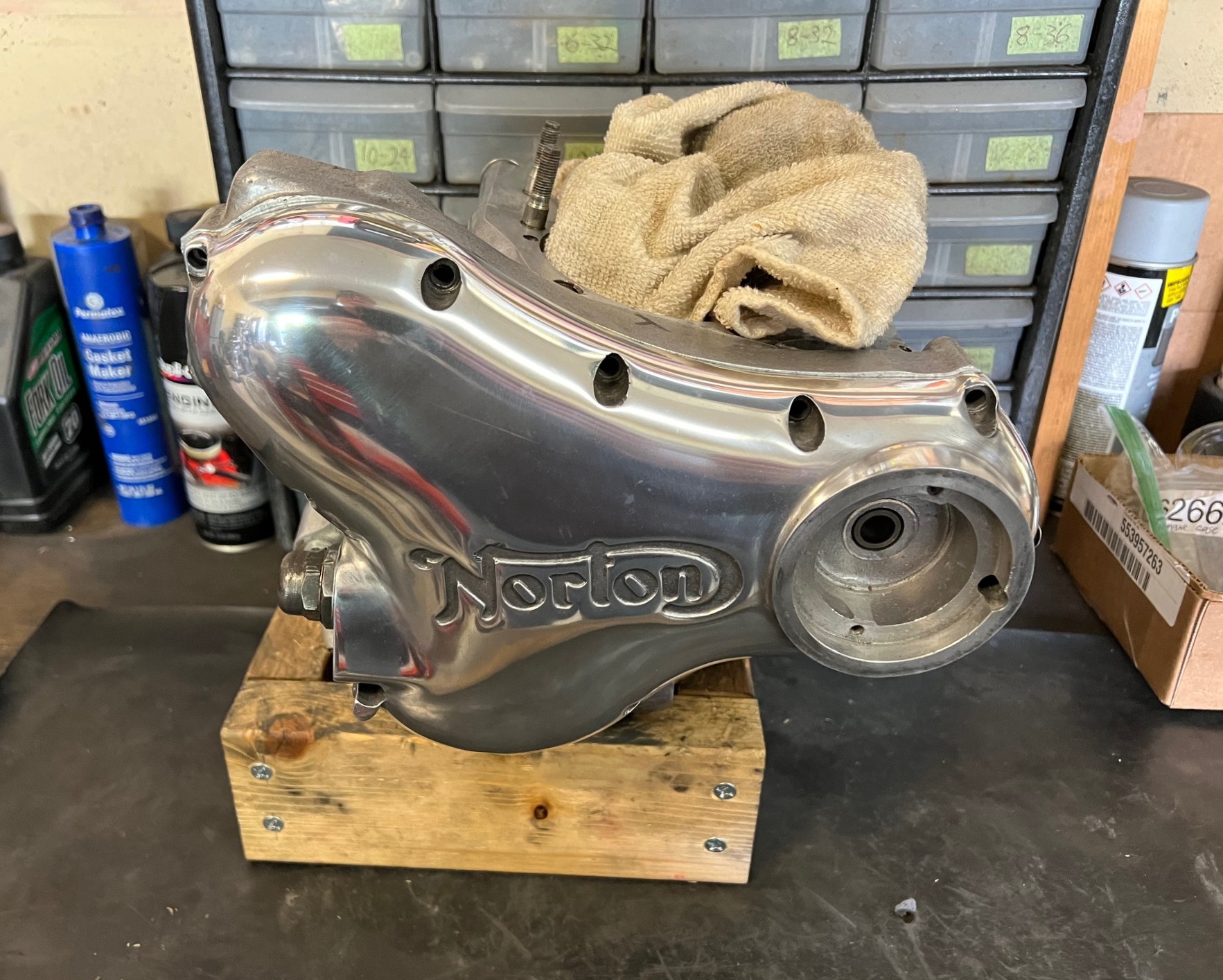
If everything is good, apply sealant, install cover, and install and tighten bolts.
**********
Norton Commando Articles: